⭐Welcome to the ADHD in Women Page ⭐
⭐The Heart and Soul of the Project ⭐
The ADHD Reframed Project provides advocacy, education and lived-experience perspectives, not medical advice, diagnosis, treatment, therapy, legal advice or crisis support.
Privacy • Accessibility • Disclaimer • Safeguarding © 2025–2026 Emma Craven and The ADHD Reframed Project. All rights reserved.
Privacy Statement - This website does not use visitor analytics, advertising trackers, contact forms, mailing lists, payments or user accounts. If you follow a link to an external website, podcast or social-media platform, that provider’s privacy policy applies.
If you contact the ADHD Reframed Project by email or social media, your information will be used only to respond, provide advocacy support or signposting, and address any necessary legal or safeguarding responsibility. Please do not send unnecessary medical records, diagnostic reports or identification documents.
No filler. No fluff.
Just a clean, powerful page that explains late‑diagnosed women!
ADHD in WomenFor decades, women with ADHD have been overlooked, misunderstood, and misdiagnosed. Many spend years believing they are disorganised, overly emotional, lazy, careless, or somehow failing at adulthood, when in reality they are navigating a neurodevelopmental difference without the knowledge, understanding, or support they need.🌱 Late Diagnosis and Rediscovery - Many women are diagnosed later in life because their ADHD does not match outdated stereotypes. They may have been viewed as daydreamers, perfectionists, people-pleasers, high achievers, or simply individuals who were trying harder than everyone else to stay afloat.
A late diagnosis often brings: Clarity, Relief, Grief, Self-compassion, Unmasking, Identity reconstruction, Emotional healing, Healthy boundaries, New ways of working and living.Women do not suddenly "become ADHD" in adulthood. They finally gain the language to understand experiences they have carried their entire lives.
🎭 The Female Masking Blueprint
Many women become experts at hiding their struggles.
They learn to copy social behaviours, suppress emotional reactions, over-prepare for every situation, over-explain themselves, over-achieve, and take on more responsibility than they can realistically sustain. They often hide sensory overwhelm, executive functioning challenges, forgetfulness, and the exhaustion that comes from constantly trying to keep up. Masking can help women survive in environments that do not understand ADHD, but it often comes at a high cost. Masking protects women, but it can also erase them.
💔 The Emotional Load of Being Missed - Before diagnosis, many women carry a lifetime of unanswered questions: Why does everything seem harder for me? Why can't I cope like everyone else appears to? Why am I constantly exhausted? Why do I keep blaming myself?
These experiences often create shame, guilt, confusion, and self-doubt. Receiving a diagnosis is not simply about gaining information. For many women, it brings relief, validation, self-understanding, and permission to stop holding themselves to impossible standards.
🔥 ADHD Burnout in Women
ADHD burnout is not simply feeling tired. It can involve: Emotional overwhelm, Sensory overload
Executive functioning shutdown, Loss of coping strategies, increased anxiety and distress, and the collapse of the mask that has been holding everything together. For many women, burnout becomes the moment they finally seek answers. Years of masking and pushing through can also lead to burnout.
ADHD burnout in women is not simply feeling tired.
It can involve:
Emotional overwhelm, sensory overload, executive dysfunction, shutdown, Loss of coping strategies, increased anxiety and distress. The collapse of the mask that has been holding everything together. For many women, burnout becomes the moment they finally seek answers.
🔥 ADHD in Women and Hormones
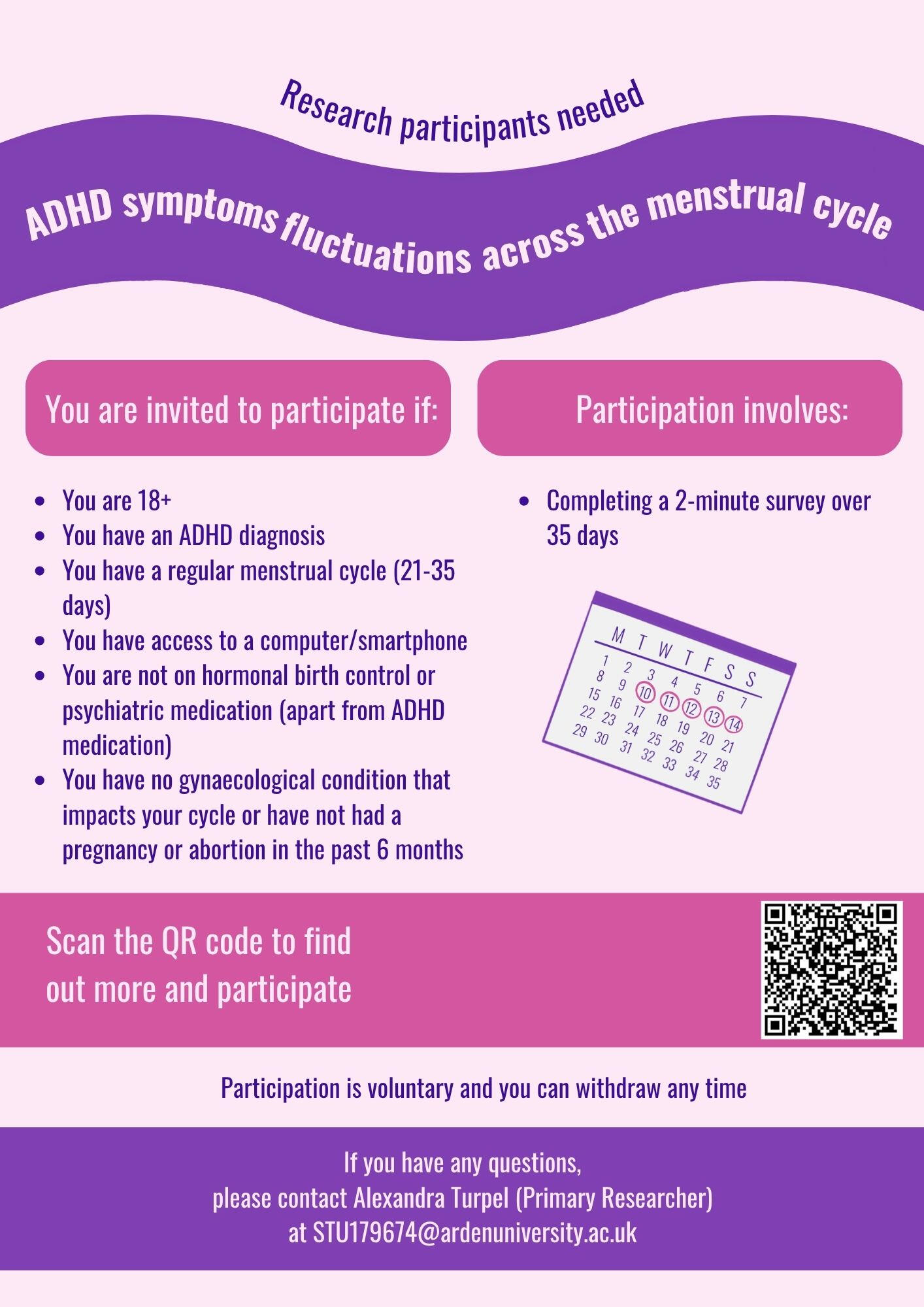
Women with ADHD often navigate additional challenges related to hormonal fluctuations throughout puberty, menstruation, pregnancy, perimenopause, and menopause.
Many experience increased difficulties with attention, emotional regulation, memory, sensory sensitivity, and executive functioning during periods of hormonal change.♀️ ADHD, Hormones & Women
One of the most overlooked aspects of ADHD in women is the role that hormones can play throughout the lifespan.
Hormones do not cause ADHD, but they can significantly influence how ADHD traits are experienced. This is because hormones such as oestrogen and progesterone interact with neurotransmitters, including dopamine, which is closely linked to attention, motivation, emotional regulation, and executive functioning. Many women report that their ADHD traits fluctuate during different hormonal stages of life, including:
🌸 Menstrual Cycle
Changes in hormone levels throughout the menstrual cycle can affect focus, memory, emotional regulation, motivation, and energy levels. Many women notice that ADHD traits become more challenging in the days before their period, when oestrogen levels decline.
🤰 Pregnancy & Postpartum
Some women experience changes in ADHD traits during pregnancy and after childbirth. Hormonal shifts, combined with sleep disruption and increased demands, can affect attention, emotional regulation, and executive functioning.🔥 Perimenopause & Menopause
For many women, perimenopause is the stage when ADHD becomes impossible to ignore. As oestrogen levels fluctuate and decline, difficulties with memory, focus, organisation, emotional regulation, and mental overwhelm can intensify. Some women only recognise their ADHD and seek assessment during this stage of life.
💜 Why This Matters
For years, many women were told they were anxious, overwhelmed, disorganised, overly emotional, or simply not trying hard enough.
What was often missed was the interaction between ADHD, hormones, and a lifetime of masking. Understanding the connection between hormones and ADHD can help women make sense of fluctuating experiences, reduce self-blame, and seek the support they need.
⭐ ADHD Women & Unmasking
Unmasking is not a switch.
It is a slow, safe, supported process. Women unmask by:
• reducing perfectionism
• saying “no”
• asking for help
• honouring sensory needs
• choosing supportive environments
• using scaffolding
• embracing difference
• rejecting shame
Unmasking is liberation.
⭐ ADHD Women & Support
Women thrive when support is:
• flexible
• compassionate
• strength‑based
• hormone‑aware
• scaffolded
• practical
• human‑centred
Support is not about “fixing” women.
It’s about removing friction.
✨ Reframing ADHD in WomenAt The ADHD Reframed Project, we believe the conversation about women and ADHD must move beyond deficits and stereotypes.Women with ADHD are not broken.We are often highly creative, intuitive, empathetic, resilient, resourceful, and innovative individuals who have spent years adapting to systems never designed with us in mind. Understanding ADHD in women is not about identifying what is wrong. It is about recognising what has always been there and creating the conditions for women to stop surviving and start thriving. 💜
Podcast Episodes with late-diagnosed ADHD Women
© The ADHD Reframed Project. Educational and advocacy content only, not medical or therapeutic advice. Privacy, accessibility and safeguarding commitments available on request.
© 2025–2026 Emma Craven. All rights reserved. The ADHD Reframed Project™ is founded and operated by Emma Craven. No part of this website, including text, graphics, resources, audio, video, training materials or podcast content, may be reproduced, distributed or published without permission.